USDA Class I Guanciale Recall: Lot 263311US Explained
FSIS recalled about 1,513 pounds of specified imported ready-to-eat guanciale after a sample tested positive for Listeria monocytogenes. No illnesses were confirmed at announcement.
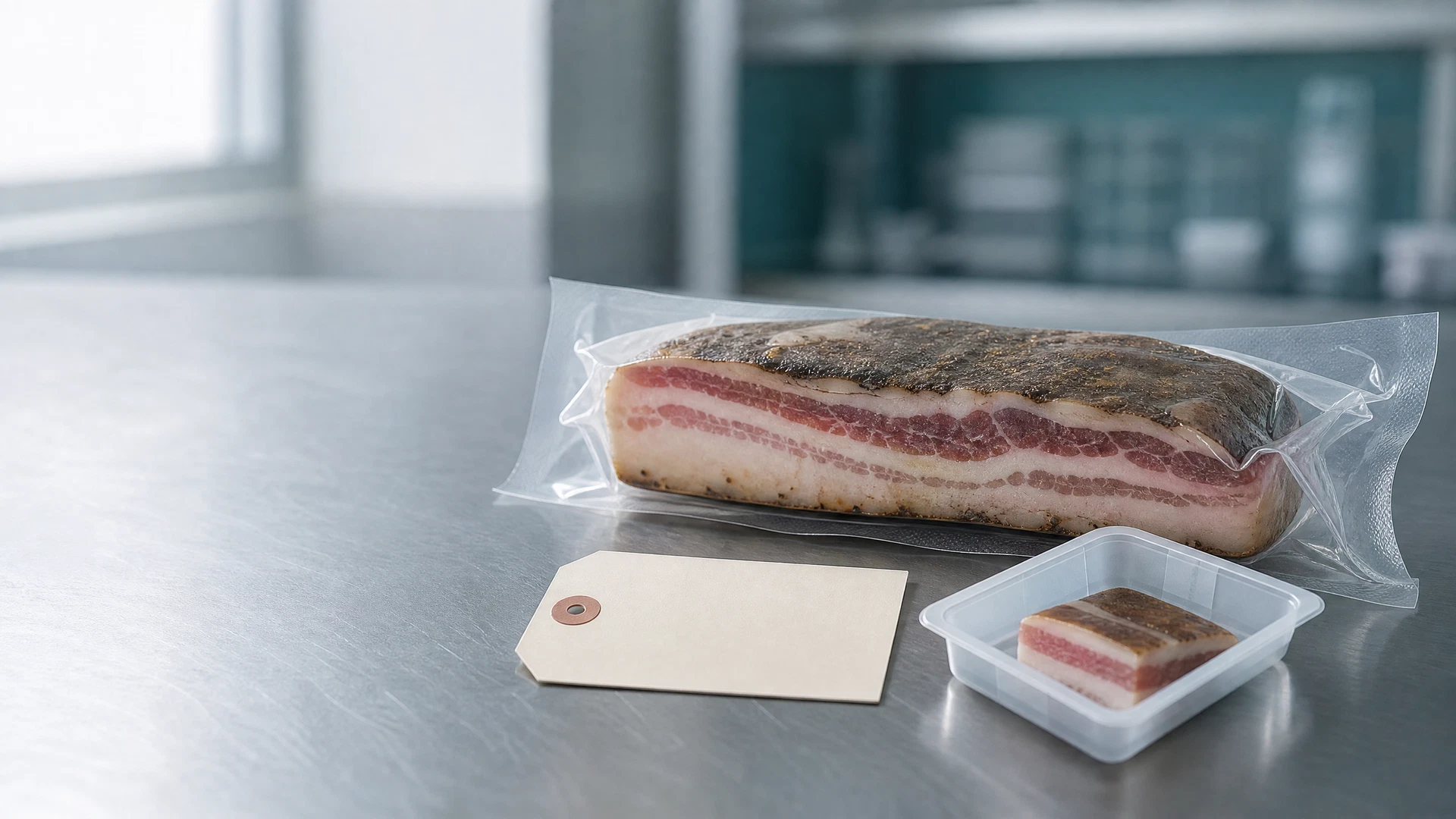
What FSIS announced
The U.S. Department of Agriculture's Food Safety and Inspection Service, or FSIS, announced an active Class I recall on 6 September 2026 involving approximately 1,513 pounds of specified imported ready-to-eat dry-cured pork jowl, commonly called guanciale. Prime Line Distributors of Fort Lauderdale, Florida, and Ferrarini USA of Hoboken, New Jersey, initiated the recall after routine import reinspection testing found a product sample positive for Listeria monocytogenes.
The notice is identified as recall cases 019-020-2026. FSIS reported no confirmed illnesses linked to consumption of the products at the time of the announcement. That statement is time-specific: it describes the agency's information when the notice was published, not proof that illness is impossible or that surveillance is complete.
This is a product- and lot-specific recall. It does not mean that all guanciale, all imported cured pork, or every product sold by either company is affected.
How to identify the recalled products
The recalled products were produced at Est. 1937L Bome SRL in Italy on 21 May 2026 and imported into the United States on various dates in July 2026. FSIS listed several case and individual-package descriptions under the Prime Line and Ferrarini names.
The common identifiers are:
- Lot: 263311US
- Best-if-used-by date: 05.16.27
- Establishment mark: IT 1937 L CE
- Product type: ready-to-eat dry-cured pork jowl, or guanciale
Some Prime Line packages also carry an additional DOK GUANCIALE label. Because package sizes vary, weight alone is not enough to determine whether a product is covered. The lot, date, establishment mark, company and product description should be compared with the current FSIS notice and its label images.
| Firm named in the notice | Product identifiers | Distribution described by FSIS |
|---|---|---|
| Prime Line Distributors, Inc. | Lot 263311US; best-if-used-by 05.16.27; establishment mark IT 1937 L CE | Food-service and retail locations in Florida |
| Ferrarini USA, Inc. | Lot 263311US; best-if-used-by 05.16.27; establishment mark IT 1937 L CE | Distributors and food-service locations in California, Florida, Idaho, Illinois, Michigan, New Jersey, New York and Texas |
The agency said food-service and retail locations should not serve or sell the listed products and that affected product should be discarded or returned to the place of purchase. The FSIS page remains the controlling source for current status, label images and any later distribution information.
What a Class I recall means
FSIS classifies recalls according to the relative health risk. Its recall guide defines Class I as a health-hazard situation in which there is a reasonable probability that use of the product will cause serious adverse health consequences or death.
The classification describes the potential health seriousness that supports the recall. It does not establish that every package contains the organism, that every exposed person will become ill, or that an outbreak has been confirmed. In this case, FSIS said the problem was discovered through routine import reinspection testing when a product sample tested positive.
FSIS explains that recalls of meat, poultry and egg products are voluntary actions initiated by a manufacturer or importer, sometimes at the agency's request. During a recall, FSIS conducts effectiveness checks to assess whether firms notified recipients and whether affected product is being retrieved and controlled. An active status means the recall process is still current; readers should not assume it is complete until the agency updates the case.
Recall, contamination finding and outbreak are different statuses
Three ideas need to remain separate.
First, a laboratory finding in a product sample can support a recall. Second, a recall removes specified product from commerce because of a potential hazard. Third, a foodborne-disease outbreak involves multiple illnesses linked to a common source through epidemiological and laboratory investigation.
The 6 September notice reported a positive product sample and an active recall. It did not report confirmed illnesses or declare an outbreak. MedoPulse therefore does not describe this event as a listeriosis outbreak and does not infer a case count.
The absence of confirmed illnesses at announcement is also not a guarantee that no illness occurred. Illness recognition, testing, reporting and source investigation can take time. Later updates can change a recall's distribution list, status or illness information, which is why the dated agency page matters more than a static social-media post or undated summary.
Why Listeria receives special attention
The U.S. Centers for Disease Control and Prevention describes Listeria infection as uncommon but potentially serious. People at increased risk of severe infection include pregnant women and newborns, adults aged 65 or older, and people with weakened immune systems. Other people can be infected but rarely become seriously ill.
CDC separates intestinal illness from invasive listeriosis. Intestinal illness can involve diarrhoea and vomiting and usually begins sooner. Invasive illness means the bacteria have spread beyond the intestines; symptoms can include fever, flu-like symptoms, headache, stiff neck, confusion, loss of balance or seizures. During pregnancy, symptoms may be mild or absent even though infection can have serious consequences for the pregnancy or newborn.
Those general facts explain the recall's health context. They do not show that a particular person has listeriosis, and an online article cannot assess symptoms, exposure, pregnancy, age, immunity or other health factors.
What readers can verify now
People and organisations checking a product should use the official FSIS recall page and label images rather than relying only on a photograph, a restaurant menu item or the word “guanciale.” The agency identifiers are the most specific way to distinguish the recalled products from other cured-pork products.
The current notice says the listed product may remain in food-service and retail refrigerators or freezers because of its long date. Businesses covered by the distribution information should follow the agency and supplier instructions. A consumer who believes they possess an affected package can compare the lot, best-if-used-by date and establishment mark with the official notice and use the contacts listed by FSIS for product questions.
Personal medical questions are different from product-identification questions. CDC advises contacting a healthcare provider when someone ate recalled or outbreak-linked food and has fever with other symptoms such as fatigue or muscle aches, especially during pregnancy, at age 65 or older, or with a weakened immune system. This is general public-health context, not an individualized recommendation from MedoPulse.
Evidence limits and update triggers
This article is based on the active FSIS recall notice, the agency's general recall-classification guide and CDC's reviewed Listeria information. The recall notice gives exact product identifiers, approximate weight, distribution and status, but it does not publish a denominator showing what fraction of the lot was tested, quantify contamination across every package or report confirmed human cases.
The notice also does not establish a causal explanation for how contamination occurred. MedoPulse therefore does not repeat speculation about import controls, restaurant preparation, company conduct or the likelihood that any individual diner was exposed.
This page should be updated if FSIS changes the recall status, publishes a retail distribution list, identifies additional lots, revises the distribution area or reports confirmed illnesses. CDC or state health authorities may separately publish outbreak information if later evidence supports it; a future outbreak notice would be a new status requiring its own source and date.
Medical review status: Pending. MedoPulse has checked the cited regulator and public-health sources, but this source-led page has not been reviewed by a MedoPulse clinician.
Educational notice: MedoPulse provides general educational information, not diagnosis, treatment or individualized medical advice. Use the current FSIS notice for product status and a qualified healthcare professional for personal health concerns.
Sources
Sources are preserved as non-clickable references so this MedoPulse page never sends visitors to another website.
- 1. Prime Line Distributors, Inc. and Ferrarini USA, Inc. Recall Imported Ready-To-Eat Pork Guanciale Products Due to Possible Listeria ContaminationUSDA Food Safety and Inspection Service · 6 September 2026Reference listed on MedoPulse
- 2. Understanding FSIS Food RecallsUSDA Food Safety and Inspection Service · 13 March 2026Reference listed on MedoPulse
- 3. About Listeria InfectionCenters for Disease Control and Prevention · 2 August 2024Reference listed on MedoPulse
- 4. Symptoms of Listeria InfectionCenters for Disease Control and Prevention · 3 February 2025Reference listed on MedoPulse