WHO Bundibugyo Virus Disease Update: 6,778 Confirmed Cases and 3,269 Deaths
WHO’s 10 September update records 6,778 confirmed Bundibugyo virus disease cases and 3,269 deaths, while noting surveillance effects and low global risk.
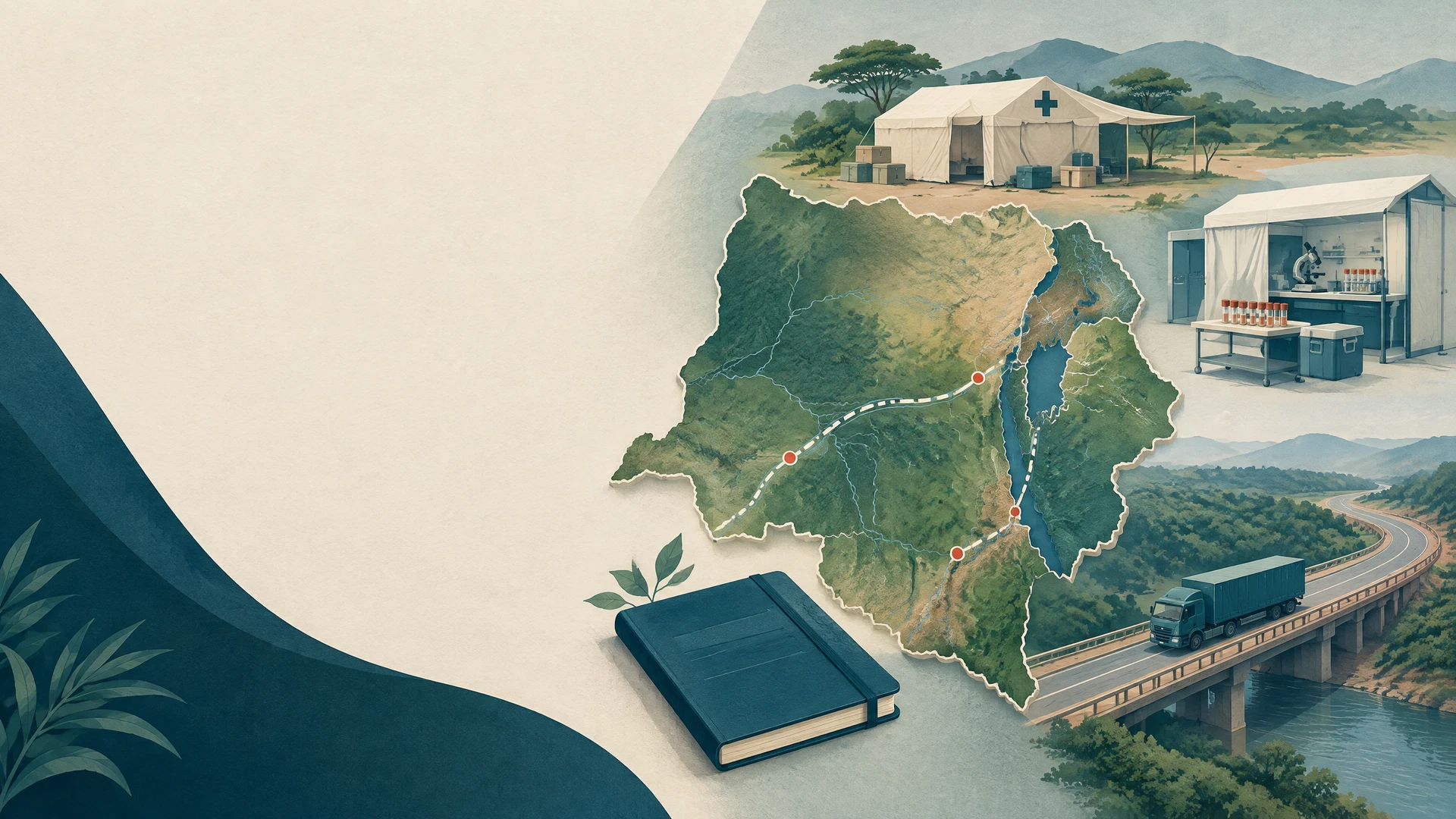
What WHO reported on 10 September
The World Health Organization published a Disease Outbreak News update on 10 September 2026 about Ebola disease caused by Bundibugyo virus in the Democratic Republic of the Congo. Its surveillance cut-off was 7 September 2026, so the publication date and the data date are different.
WHO recorded 6,778 confirmed cases across all countries named in the event: 6,757 in the Democratic Republic of the Congo, 20 in Uganda and one in France. The DRC total included two people diagnosed there and later treated in Germany. WHO also reported 3,269 deaths overall and at least 1,611 recoveries.
These figures describe a large and severe outbreak, but they do not show the current risk to every reader. WHO assessed risk as very high in the DRC, high for countries sharing a land border with the DRC, and low for the rest of the African Region and globally.
The DRC carries nearly all reported burden
The DRC had reported 6,757 confirmed cases and 3,267 deaths, giving a crude case-fatality ratio of 48.3%. A crude case-fatality ratio divides reported deaths by reported confirmed cases. It can change as cases resolve, records are reconciled or surveillance captures earlier events; it is not an individualized prediction for a person who becomes ill.
Confirmed cases had been recorded in 61 health zones across six provinces. Fifty-one health zones in five provinces had reported at least one case in the preceding 21 days. Kayna health zone in North Kivu was the most recently affected area.
Ituri remained the outbreak’s epicentre with 5,406 cumulative confirmed cases, including 1,114 reported in the preceding 21 days. North Kivu had 1,066 cumulative cases, including 453 in the preceding 21 days. WHO reported that North Kivu had one of the outbreak’s highest provincial case-fatality ratios, 65.4%, and said investigations were continuing to understand the factors behind that mortality.
Why the increase needs careful interpretation
Since WHO’s previous update on 28 August, the DRC added 963 confirmed cases and 481 confirmed deaths. WHO did not attribute the entire change to new transmission. It said part of the increase could reflect stronger surveillance, enhanced laboratory testing, improved diagnostic capacity and reconciliation of previously unreported data, while continued growth also reflected sustained community transmission and geographic expansion.
That distinction matters. Better surveillance can make an outbreak curve rise because more existing infections are detected or earlier records are incorporated. WHO also described active transmission and expansion. Both the epidemic and the information system influenced the reported increase.
Contact tracing shows the operational scale
WHO reported that 21,359 of 24,719 identified contacts, or 85.3%, were successfully monitored during the previous 24 hours. This is a one-day operational indicator, not a guarantee that every exposure chain was known or interrupted. Informal border crossings, delayed detection and difficulty reaching affected communities can leave gaps even when teams monitor a large majority of listed contacts.
Conflict and displacement constrain the response
WHO placed the outbreak within a humanitarian emergency marked by insecurity, armed conflict and population displacement. It reported that more than 26 million people were experiencing acute food insecurity and that approximately one million internally displaced people were living in Ituri Province.
These conditions can limit access to health services and make surveillance, case investigation, contact tracing, safe care and community outreach harder. Overcrowding and restricted water, sanitation and hygiene services can further weaken infection prevention. The figures do not prove that one factor caused a particular infection or death, but they explain why outbreak control is not only a laboratory or clinical task.
Vaccine use remains a research question
WHO said evidence remained insufficient to support routine programmatic use of Ervebo against Bundibugyo virus disease and that efficacy against this disease in humans remained unknown. WHO therefore recommended its use only within a research protocol in this outbreak.
As of 6 September 2026, 2,007 healthcare and frontline workers had been vaccinated across six health zones in Tshopo, Bas-Uélé and Ituri. That operational total is not proof that the vaccine prevents Bundibugyo virus disease. It records research-protocol use while the relevant efficacy question remains unresolved.
WHO also reported that a treatment trial had opened in five clinical-management facilities in Ituri and enrolled more than 300 people with confirmed disease. An ongoing trial is not the same as a proven or approved specific treatment.
What the risk assessment means outside the region
WHO’s low global risk assessment does not mean zero possibility of an imported case. It means that, using the information available, risk outside the DRC and neighbouring countries was substantially lower than in the outbreak’s centre and border region.
For readers in India, the appropriate relevance is public-health preparedness: timely recognition, laboratory confirmation, infection prevention in healthcare settings, surveillance quality, contact follow-up and coordination across jurisdictions. The update does not report an outbreak in India, establish elevated personal risk for people in India or support routine vaccination advice for the Indian public.
What the evidence supports—and what it does not
The update supports five central conclusions: the outbreak remained large and geographically extensive in the DRC; reported cases and deaths had increased since 28 August; both sustained transmission and stronger detection or data reconciliation affected observed totals; response operations faced major humanitarian constraints; and vaccine use remained within a research protocol because human efficacy was unknown.
The update does not provide an exact infection-fatality rate, show that every newly reported case was infected during the reporting interval, establish Ervebo effectiveness for Bundibugyo virus disease, or support individualized diagnosis, treatment or travel decisions.
What would require an update
This page should be revised if WHO changes the risk classification, publishes materially different totals, reports a new affected country, changes its vaccine recommendation, releases trial findings or declares a major change in outbreak status. The figures are a dated surveillance snapshot, not a live counter.
Medical review status: Pending. MedoPulse has checked the cited WHO source, but this source-led page has not been reviewed by a MedoPulse clinician.
Educational notice: MedoPulse provides general educational information, not diagnosis, treatment, vaccination advice or an individualized risk assessment. Public-health guidance can change as an outbreak evolves.
Sources
Sources are preserved as non-clickable references so this MedoPulse page never sends visitors to another website.
- 1. Ebola disease caused by Bundibugyo virus — Democratic Republic of the CongoWorld Health Organization · 10 September 2026Reference listed on MedoPulse