At-Home Testing
Learn about at-home medical testing, including when to use self-tests, how to interpret results, and when to seek professional medical advice. Understand the benefits and limitations of testing from home.
Prepared from the sources listed below. This overview is educational and is not a diagnosis or treatment plan.
Overview
A clear starting point
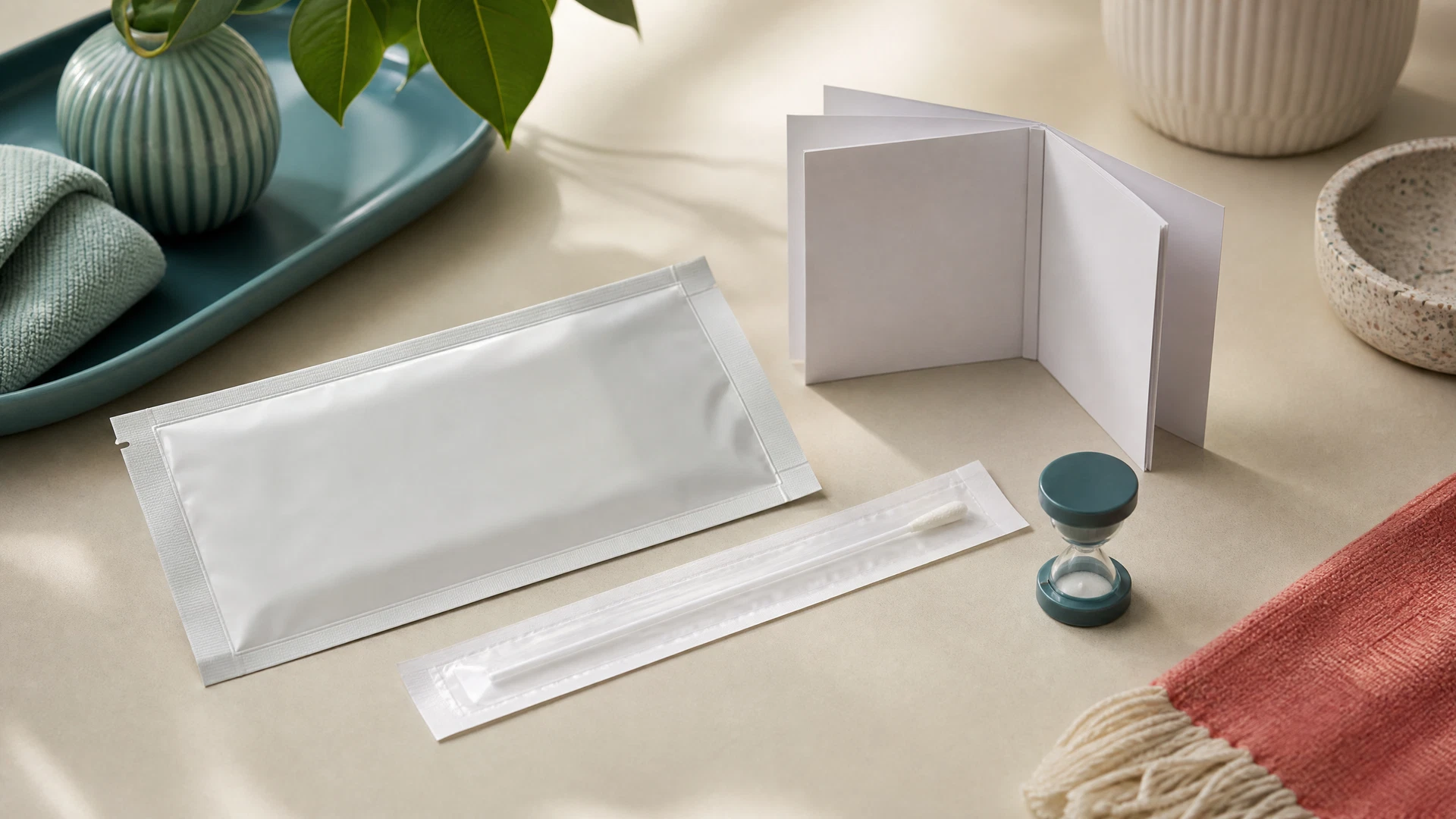
At-home testing, also known as self-testing, offers a convenient way to screen for or monitor certain health conditions from the comfort of your home. These tests typically involve collecting a sample—such as saliva, nasal swab, or a small blood drop—and either processing it yourself or sending it to a laboratory. While regulatory agencies like the FDA and ICMR authorize various kits for infectious diseases and chronic monitoring, it is crucial to follow instructions carefully. At-home tests provide valuable preliminary information but should not replace professional medical evaluation, especially when symptoms are present or confirmatory testing is needed.
Four key facts
- 1At-home tests, or self-tests, allow individuals to collect samples and often read results outside a clinical setting.
- 2Regulatory bodies like the FDA and ICMR evaluate specific at-home tests for safety and accuracy before authorization.
- 3Self-tests are available for various conditions, including infectious diseases like COVID-19 and HIV, as well as chronic condition monitoring.
- 4A negative result on an at-home test does not completely rule out an infection or condition, especially if symptoms are present.
Useful points to discuss
When professional care may be important
These examples are not a diagnosis checklist. New, severe, rapidly worsening, or concerning symptoms should be assessed by a qualified healthcare professional; emergencies require local emergency services.
- Seek immediate medical attention if you experience severe symptoms, regardless of a negative at-home test result.
- Consult a healthcare provider if your symptoms worsen or persist after an initial at-home test.
- Contact a doctor for confirmatory testing and guidance if you receive a positive result for a serious condition.
Source trail
Authoritative references
Source publishers and titles are listed as non-clickable references so this page never sends visitors to another website.
- 1. U.S. Food and Drug Administration (FDA)At-Home OTC COVID-19 Diagnostic TestsPublished or updated 2026-02-23
- 2. Centers for Disease Control and Prevention (CDC)Self-Testing At Home or Anywhere
- 3. Indian Council of Medical Research (ICMR)Media report on HIV oral saliva self-test